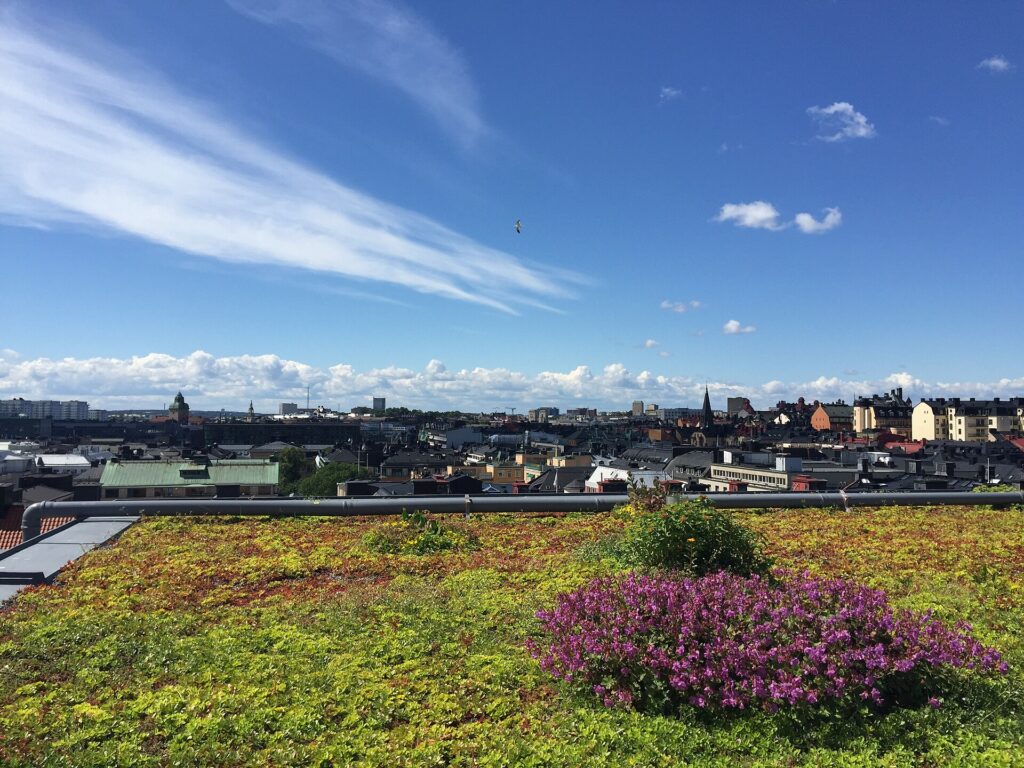
An office, a hotel, a coworking space, a facility or a commercial building with a flat roof or terrace.
You work on facilities or sustainability
Facilities, ESG, sustainability or real-estate teams.
You want action you can document
A visible intervention on your own asset, with records for your reporting.
What you get
Three kinds of value from one roof
Building
Less heat on the top floor, waterproofing protected from sun and heat, rainwater held on the roof. Can sit alongside solar panels, subject to design.
People
Greener views, usable outdoor space where feasible, and a place your employees, members or guests will enjoy.
ESG
Documented action on an asset you manage: records, agreed indicators and a possible contribution to building certifications.
More than a roof: a place for your people and your guests
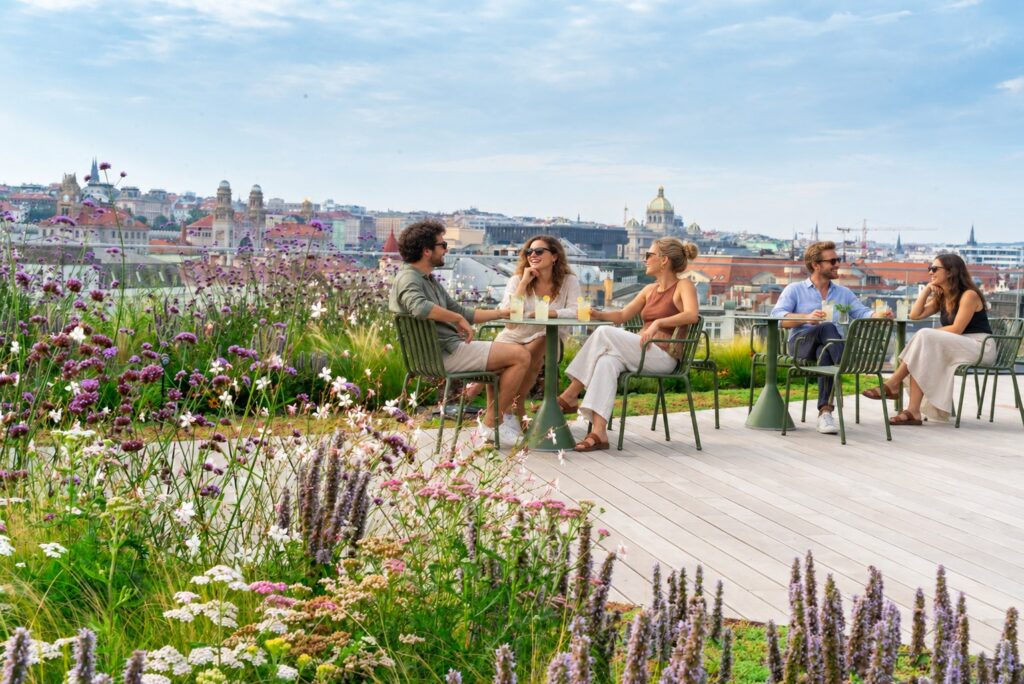
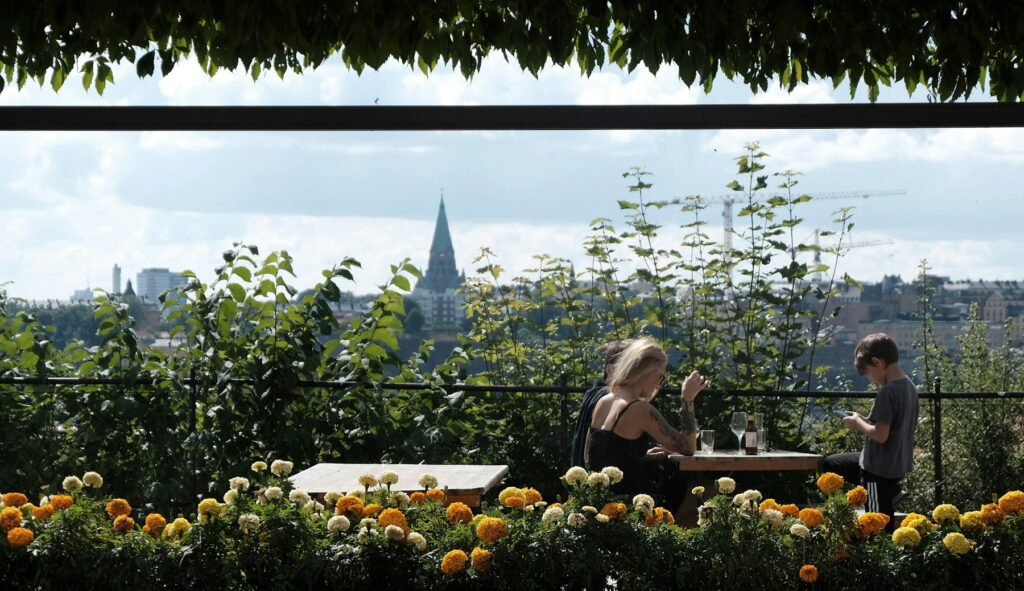
A green roof can become part of daily life in your building: one more reason for people to come in, and for guests to stay.
A break your team looks forward to
Coffee, lunch and informal meetings on a green roof, a few steps from the desk.
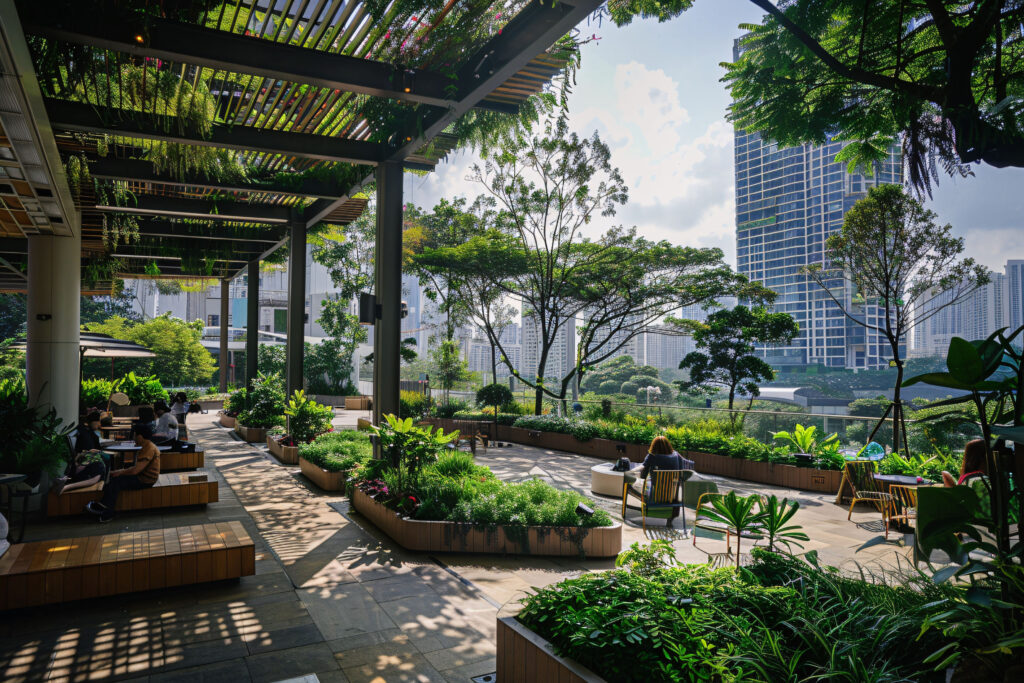
Work among the plants
A quiet corner to work or take a call in the fresh air: a perk for coworking members and staff alike.
A terrace your guests remember
For hotels: breakfast, drinks or a quiet moment on a green rooftop that sets you apart.
Events with a view
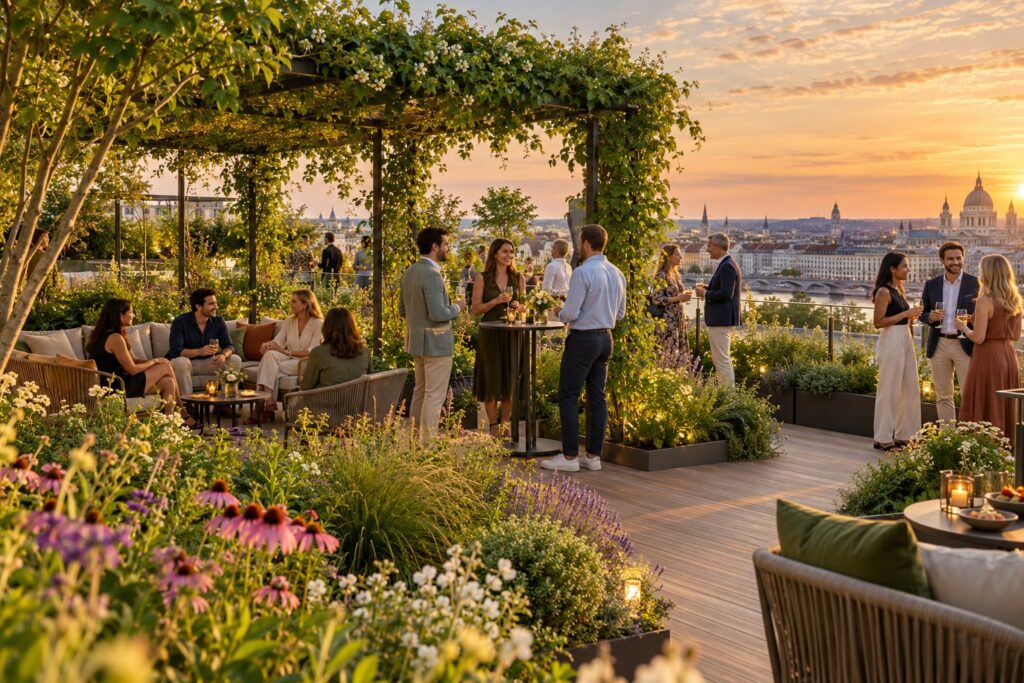
Team gatherings, client receptions and private events under the plants.
How a green roof is built
Seven layers on top of your roof
Vegetation: plants chosen for the roof and climate
Substrate: light growing medium, not garden soil
Filter fabric: keeps fine soil out of the drainage
Drainage & water storage: holds rainwater, drains the excess
Protection mat: shields the waterproofing
Root-resistant waterproofing: stops water and roots
Your existing roof: checked for load before we start
A green roof is not soil spread on a terrace. It is a tested system of layers that protects the building, holds rainwater and keeps the plants alive with little care.
It sits on top of your existing roof. That is why the first thing we check is whether the structure can carry the extra weight, whether the waterproofing is in good shape, and how the roof is accessed safely for maintenance.
Which type fits your roof
Three kinds of green roof
Extensive
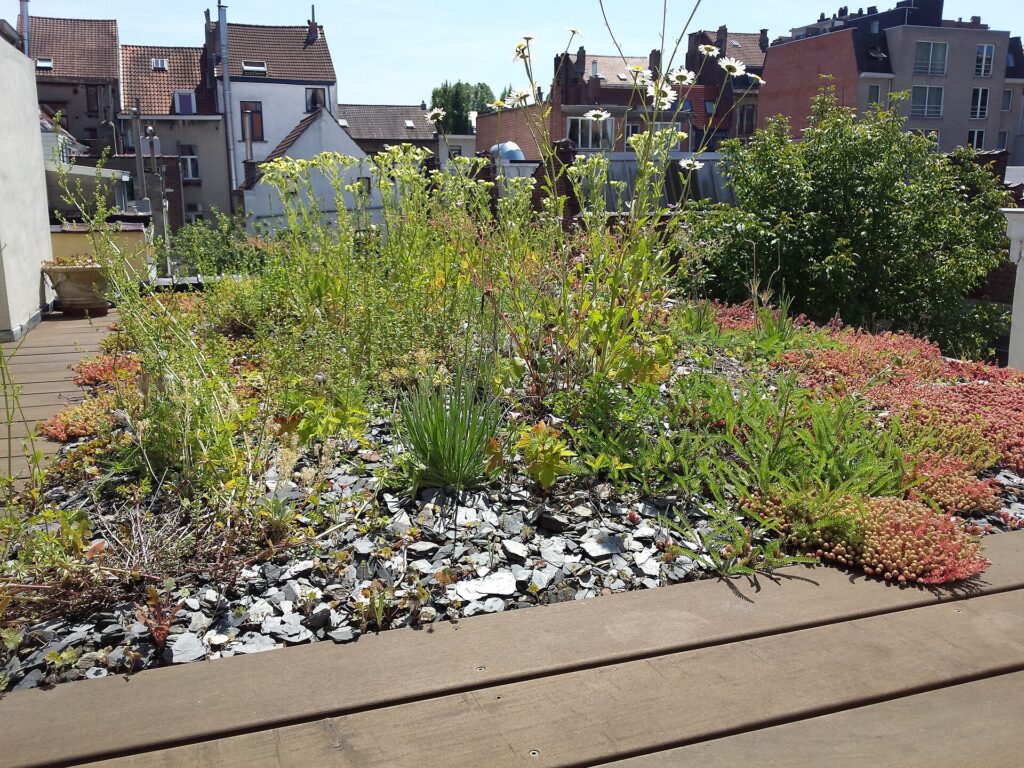
Low plants such as sedums, grasses and wildflowers.
About 8–15 cm of growing medium
The lightest option: roughly 80–150 kg/m² when wet
A few maintenance visits a year
Best for: large flat roofs on offices, warehouses and retail, with low running costs.
Semi-intensive
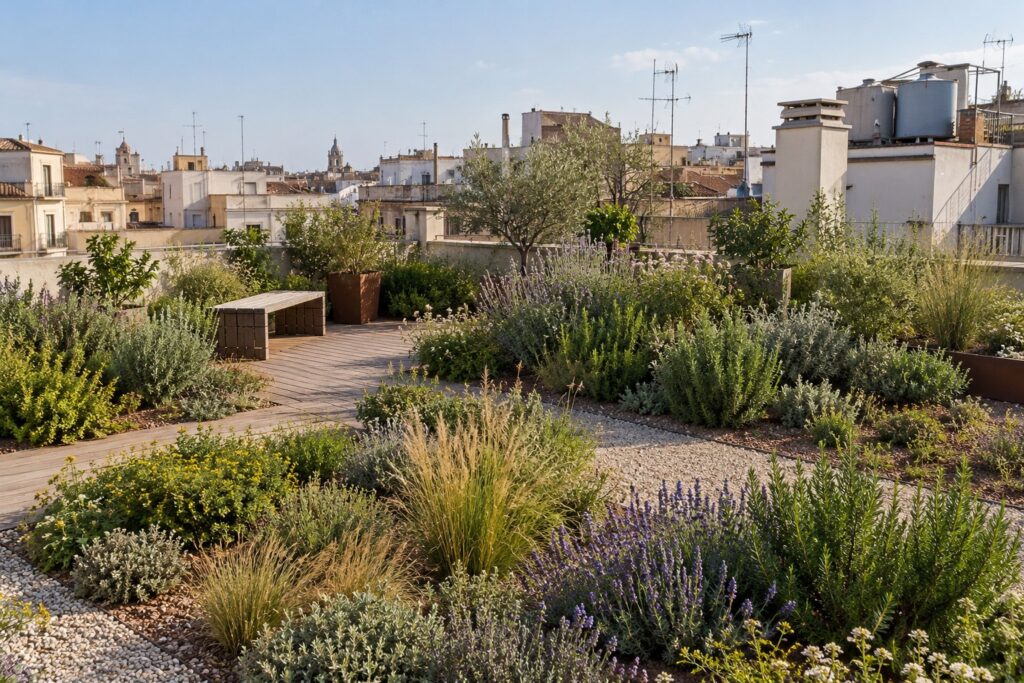
Perennials, aromatic herbs and low shrubs.
About 15–25 cm of growing medium
Roughly 150–250 kg/m² when wet
Some watering and seasonal care
Best for: a roof terrace your team can use for breaks and events.
Intensive
A real roof garden, with shrubs, lawn and even small trees.
25 cm of growing medium or more
From about 300 kg/m² when wet
Garden-level care and irrigation
Best for: flagship buildings with a strong structure and a roof open to staff or visitors.
Indicative values. The exact system, weight and maintenance depend on your roof and are confirmed by the installer after the preliminary assessment.
How it works for you
Four steps, one team
01
Share your objectives
Building, team, reporting: what matters to you.
02
Preliminary assessment
Structure, waterproofing, permits and incentives.
03
Specialist and design
The right installer from our network, one project lead.
04
Delivery and records
Installation, maintenance plan and documentation.
Your investment
An investment in your own building
After the preliminary assessment, we prepare a tailored proposal based on your roof’s size, structure, access and the system chosen.
We also look into the public grants and incentives that may apply to your building.
The result is an improvement to an asset you own or manage, with documented outcomes you can use in your sustainability reporting.
It depends on the city and the building. In most cases a green roof on an existing building needs a communication or a minor-works permit. If you rent the building, the owner also needs to agree. We check what applies and prepare the documents with the installer.
The installation itself usually takes from a few days to a few weeks, depending on the size of the roof. Before that, the assessment, design and approvals take most of the time. After the assessment we give you a realistic timeline.
No suitable roof?
Adopt one in the city where you work. We find the roof, build it and give you the records of what your company made possible.