We check whether your roof is suitable, find the right installer, look for grants and coordinate the project from the first visit to the last plant.
On a house or an apartment building, used little or not at all.
Homeowners, the building’s board or president, or the property manager.
If the waterproofing is due for renovation, it is the best moment to green it.
Plants and soil keep the roof shaded, so far less heat reaches the homes below.
The green layer protects the waterproofing from sun and temperature swings.
A green view, rainwater held on the roof and a more attractive building to live in.
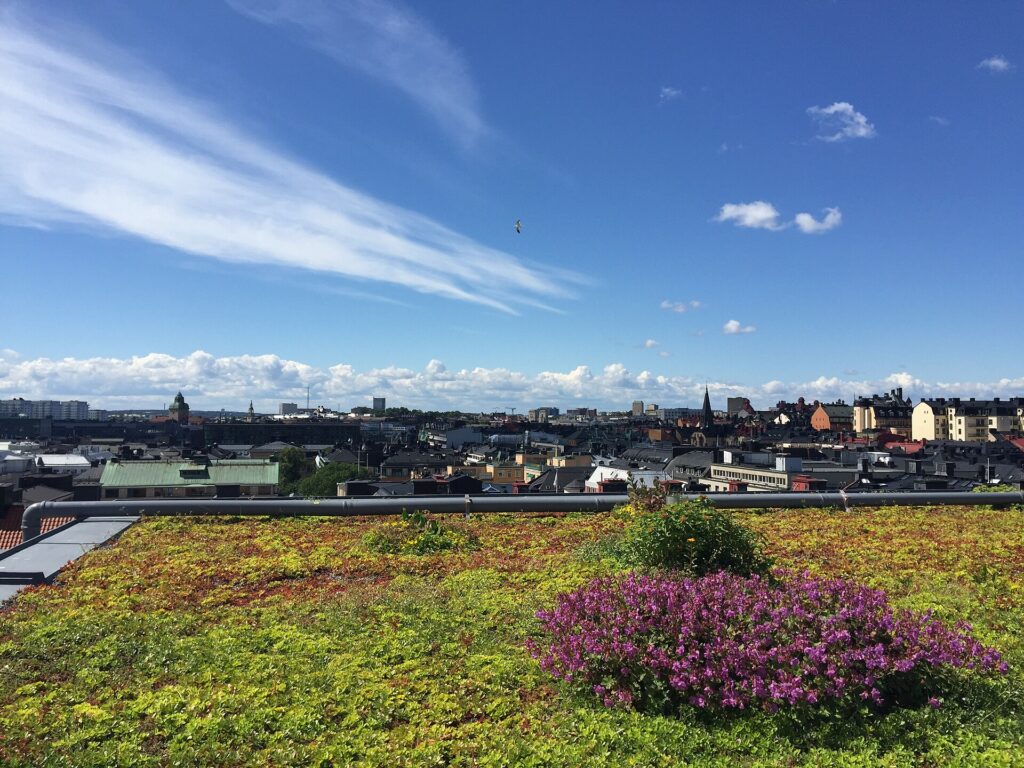
A few examples from other cities, to give you ideas for yours.
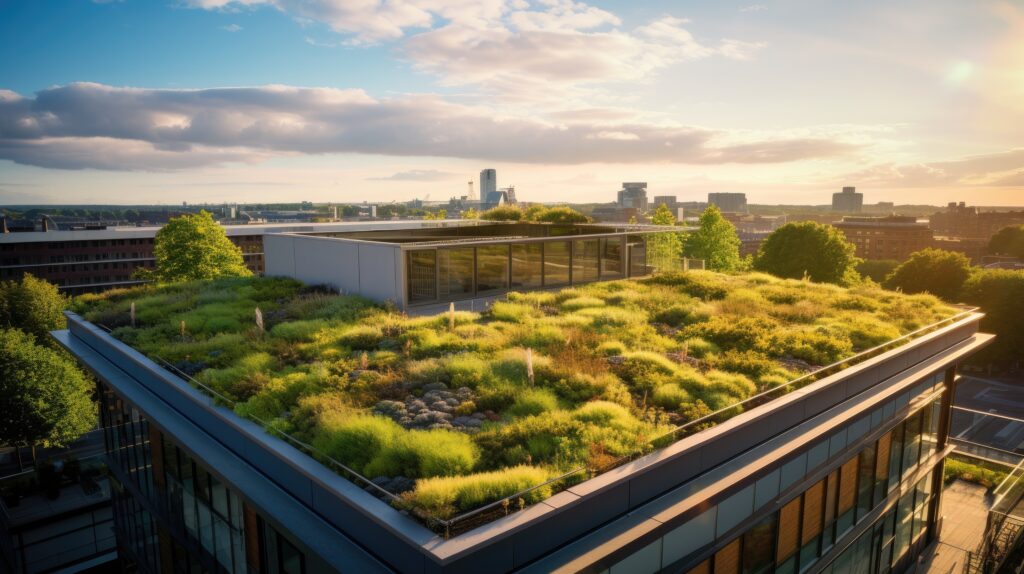
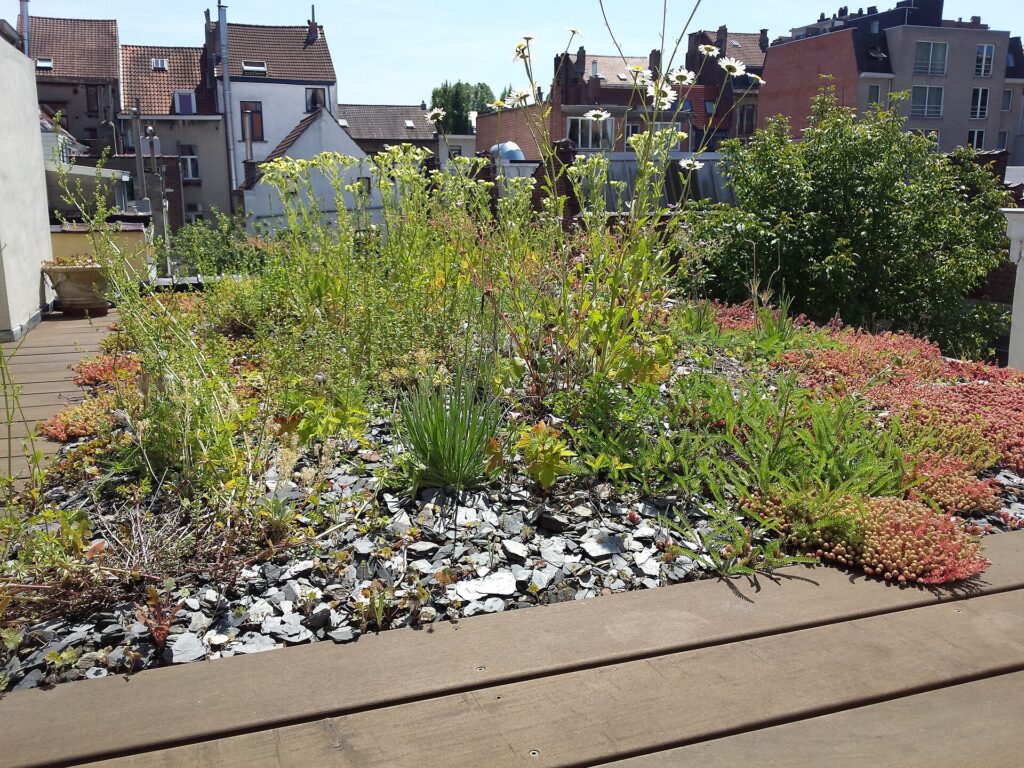
Neighbours in taller buildings look out on a living meadow instead of grey gravel.
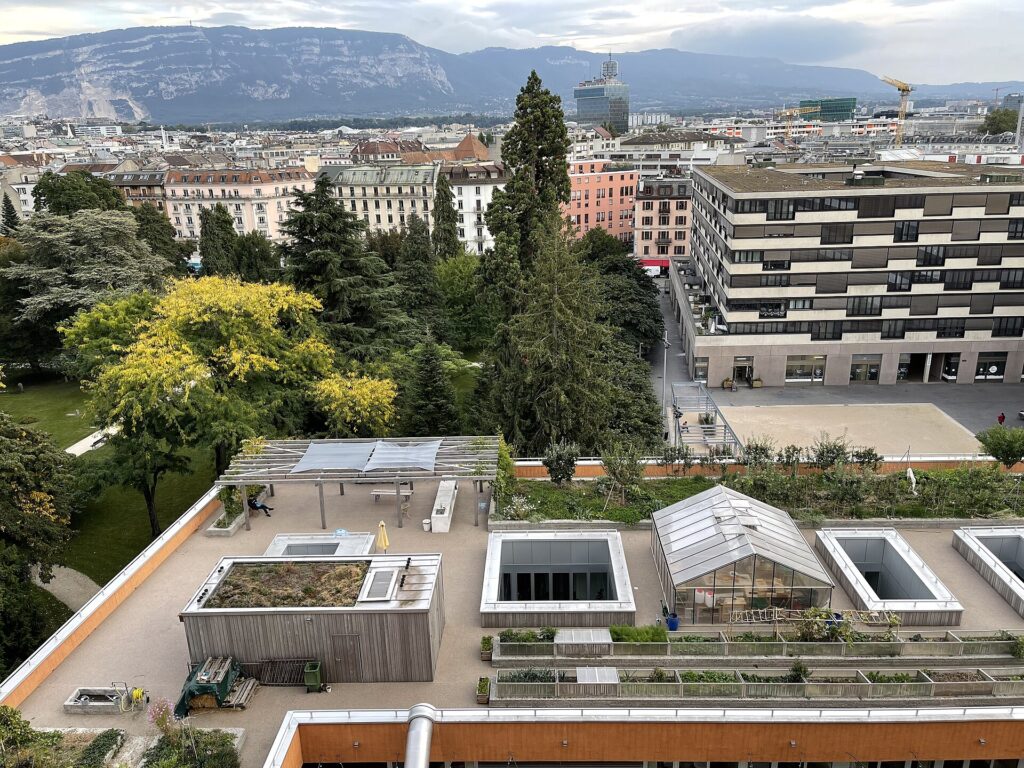
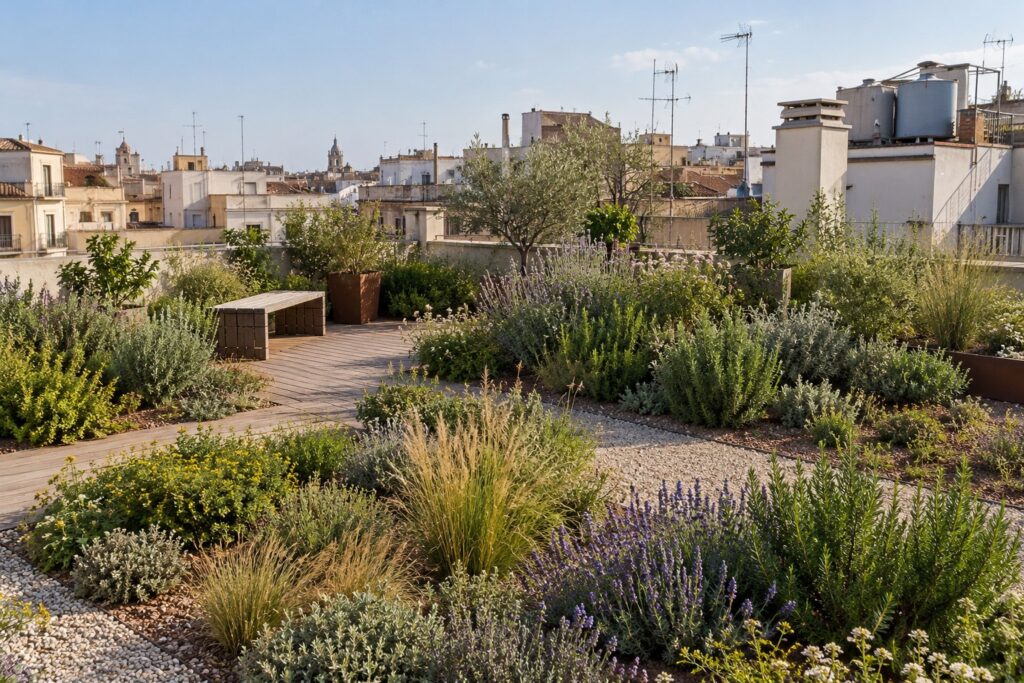
A pergola, benches and planters turn the roof into an open-air common room.
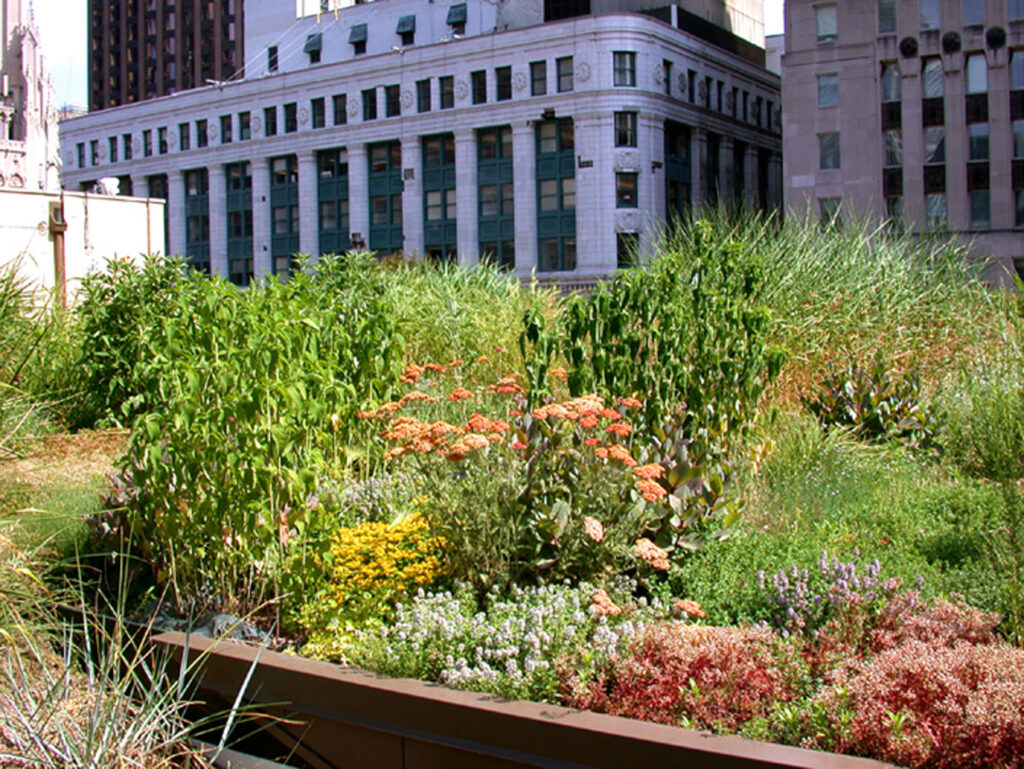
Native flowering plants feed pollinators all season, as on Chicago City Hall.
A green roof is not soil spread on a terrace. It is a tested system of layers that protects the building, holds rainwater and keeps the plants alive with little care.
It sits on top of your existing roof. That is why the first thing we check is whether the structure can carry the extra weight, and whether the waterproofing is in good shape or due for renovation anyway.
Low plants such as sedums, grasses and wildflowers.
Best for: roofs you don’t use every day, or with limited load.
Perennials, aromatic herbs and low shrubs.
Best for: a shared terrace the neighbours can enjoy.
A real roof garden, with shrubs, lawn and even small trees.
Best for: strong structures and roofs people use every day.
Indicative values. The exact system, weight and maintenance depend on your roof and are confirmed by the installer after the roof check.
A short call and a few photos.
Structure, waterproofing, access and available grants.
The installer, the price and the plan, ready for the owners to approve.
We coordinate the works and plan the maintenance.
Every roof is different, so we don’t work with fixed prices. After the free roof check, you receive a tailored proposal based on your roof’s size, structure, waterproofing and the system that suits it best.
If your roof is due for renovation, it’s the ideal moment: adding a green layer often costs only slightly more than a conventional renovation, and helps protect the waterproofing for longer.
We also look into the public grants and subsidies your building may be eligible for.
Most flat roofs can host some kind of green roof. It depends on how much extra weight the structure can carry; lightweight systems exist for roofs with limited capacity.
A well-designed green roof sits on top of the waterproofing with a root barrier and protects it. We always check the existing waterproofing first.
Works on a shared roof usually need the approval of the other owners. We prepare a clear summary you can present to them.
A low, extensive green roof needs only a few visits a year. We plan maintenance with the installer from the start.
It depends on the city and the building. In most cases a green roof on an existing building needs a simple communication or a minor-works permit. We check what applies to your building and prepare the documents with the installer.
The installation itself usually takes from a few days to a few weeks, depending on the size of the roof. Before that, the roof check and the approvals from the owners and the city take most of the time. After the check we give you a realistic timeline.

Offer it for adoption. We look for a company that wants to sponsor a green roof on your building.
Tell us who you are and we will call you back. Details about the roof can wait for the call.
We’ll only use your details to get back to you. Email info@jungleroofs.com to have them deleted.